How a branch becomes a table
Deep in northern Thailand, a single monkey-pod branch spends the better part of a year becoming furniture. I went to watch it happen — and to understand why no one there is in any hurry.

The workshop sits at the end of a red-dirt road outside Chiang Mai, open on one side to the rice fields. Every Haussmann table starts here as a branch of the rain tree, and leaves months later as a single block of solid wood shaped almost entirely by hand. What happens in between is unhurried, and mostly done by feel.
Only the branches
They cut only the branches of the monkey-pod tree, a metre or two at a time, so the tree keeps growing and nothing is felled for the sake of a table. The heartwood runs from pale reddish-beige to deep brown, sometimes shot through with dark swirls — the slow record of a tree that took decades to grow. While the wood is still green and heavy with sap, a carver named Somchai roughs out the form with a chainsaw, leaving generous material for the finish carvers who follow.
This is not factory work. We move with the rice planting, the harvest, the holy days. The wood waits for us.
Somchai · finish carver
Months in the sun
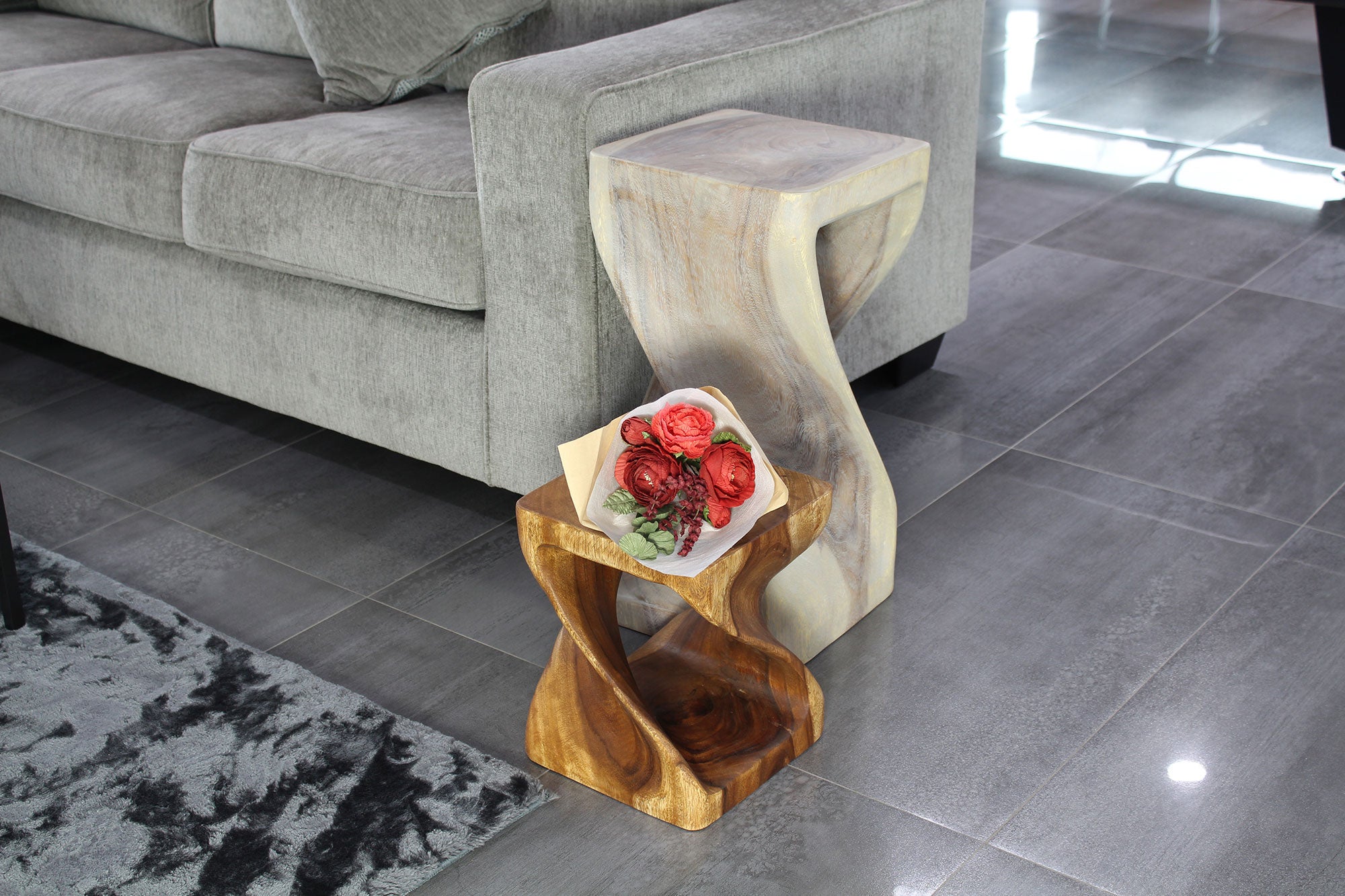
The rough piece then rests in a solar kiln for months, until the moisture held deep in the grain drops below twelve percent. Look closely at any finished table — a double twist end table, say — and you will find two small holes set side by side: the “snake bite,” where a moisture meter was pressed into the core. It is the last reading taken before the Haussmann mark is set into the wood.

Finished by hand, in oil
There are no sealers, no lacquer, no chemical finishes. Instead a natural oil is worked in by hand, coat over thin coat, across five to seven days, until the grain settles into a soft, matte glow you can feel as much as see. It is the same hand-rubbed oil finish you feel on the Original Twist end table in walnut. Finished this way, a piece ages gently, deepening with the years, and can one day go back to the earth it came from.
Grain, checking, knots and tool marks vary from one piece to the next. None of it is a flaw. Each table is a slice of a living thing, carried from that red-dirt workshop into your home.
No two pieces read the same. You can see how far the grain and the carving vary across the twist end tables, the double twist end tables, and the wood benches.

The workshop, in motion
A few short films from the bench — the same pieces, shaped and oiled by hand.


